
Why tracking changes the wait
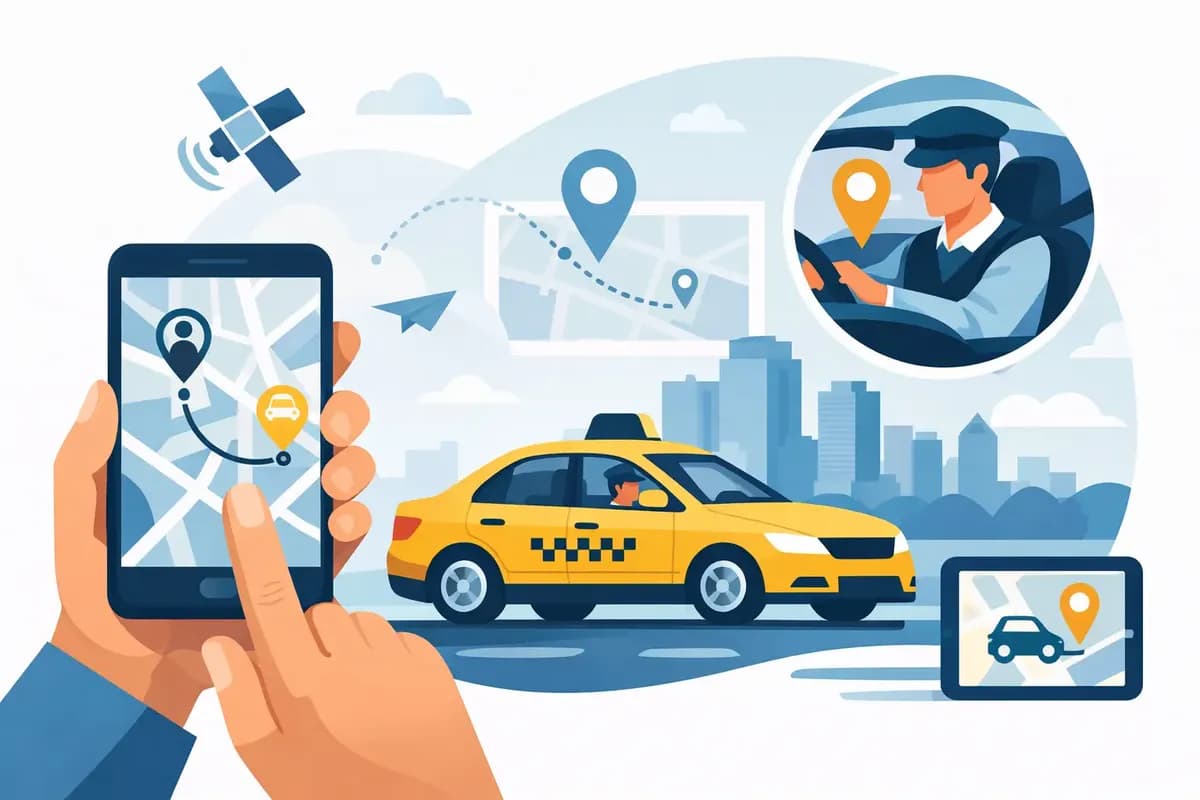
A taxi is often needed at the point when a journey has already become complicated: outside an airport terminal with luggage, at a hotel after a late arrival, or on an unfamiliar street when the weather has turned. Live taxi driver tracking replaces the usual uncertainty with something practical - a moving vehicle on a map, a visible pickup point and clearer information about what happens next.
For visitors and residents, that visibility changes more than the wait. It removes the need to describe a location over the phone, guess whether a driver has found the right entrance or wonder if the booking is still active. You can follow the assigned vehicle, prepare to meet it and manage the trip from the same app.
What live taxi driver tracking changes
Traditional dispatch can work well when you know the local area, speak the language and have a clear landmark to share. It becomes less comfortable when you are outside a large hotel, by a marina, at a block of flats with several entrances or near a busy old-town gate. A driver may be close by, while passenger and driver are looking at different sides of the same street.
Map-based booking starts with a clearer shared reference. You set the pickup point on the map, add a destination if you know it, and submit the request. Once a licensed driver accepts, the app can show the vehicle's live position as it approaches.
That does not mean every estimated arrival time is exact to the minute. Traffic, one-way streets, temporary roadworks and a busy pickup area can all affect the route. The value is that you can see movement and progress rather than relying on an unexplained estimate.
For a traveller arriving in Tivat, Podgorica or along the coast, this is particularly useful after a flight or ferry crossing. You may have limited mobile data, low battery or no confidence that you have pronounced the destination correctly. A live map gives you a simple reference point without turning the pickup into a negotiation.
Live taxi driver tracking before pickup
The most useful tracking begins before the car is nearby. After a request is accepted, check the pickup pin first. A pin placed on the wrong side of a main road can add several minutes and create an avoidable missed connection. If the app allows trip details to be updated, make the correction while the driver is still approaching.
Then compare the driver's position with the real layout around you. Hotel driveways, airport ranks and pedestrianised streets often have designated collection points. If you are at a venue with multiple exits, move to the entrance closest to the pin only when it is safe and permitted. Staying visible, with your phone available, helps the final handover go smoothly.
There is a sensible balance to strike. Do not leave your accommodation too early simply because the driver has been assigned. Equally, do not wait until the vehicle appears at the entrance before collecting bags or checking out. Watching the approach lets you time those small tasks more comfortably.
Availability still depends on your location, the time of day and nearby drivers who are online. In a busy central area, a driver may accept quickly. In a quieter location, during poor weather or after a major event, the wait may be longer. Tracking improves clarity after a driver has been assigned; it cannot create availability where there is none.
A clearer journey from request to arrival
A well-designed taxi app should keep the booking process simple. With Blic Taxi, the passenger flow is built around setting a location, requesting a licensed local driver and following the active ride from one screen. The purpose is not to add more steps to a taxi journey. It is to make each stage easier to check.
First, set an accurate pickup point. Use the map rather than relying only on a written address. Addresses can be incomplete, shared by several buildings or difficult for visitors to identify. Zoom in and place the pin where a car can reasonably stop, rather than in the middle of a beach promenade, inside an old-town pedestrian zone or at a hotel name that covers a large complex.
If you are booking for someone else, confirm where they are standing before you request the ride. A precise pin is more useful than a vague message such as 'outside the restaurant'.
Second, add the destination when you can. Entering the destination gives both sides a clearer picture of the intended trip. It is helpful for a ride from a hotel to a restaurant, a transfer from Budva to Kotor, or a late-night return to accommodation when explaining directions would be inconvenient.
There are occasions when plans change. A traveller might need to stop at an ATM, collect keys or change the final drop-off point. Use the in-app journey controls where available and keep the driver informed through the appropriate app options. The earlier a change is made, the easier it is to manage safely and fairly.
Third, follow the vehicle, then verify the ride. As the vehicle gets close, use the map to judge its approach rather than staring only at an arrival estimate. A driver may need to circle because of traffic restrictions or enter a hotel forecourt from another road. If the vehicle appears stationary for a short period, it may be waiting at a traffic light, gate or rank.
When the taxi arrives, check that it is the assigned ride before getting in. Live location is a useful part of that reassurance, but passengers should still use the booking details shown in the app and follow normal personal-safety judgement.
Why tracking matters beyond convenience
The obvious benefit is knowing when to walk outside. The less obvious benefit is independence. International visitors do not need to rely on a receptionist to call a taxi, explain their location in another language or chase an update on their behalf. They can see the request status and vehicle movement themselves.
This is also useful when travelling in groups. One person can place the booking while everyone else gathers luggage, finishes a meal or checks that children have their belongings. The shared question - 'Where is the taxi?' - has a straightforward answer on the map.
For drivers, accurate pickup information can reduce time spent searching for passengers and help them organise active journeys more efficiently. A professional driver app is not just a source of requests. It is a working tool for receiving rides, managing the current trip and reviewing completed activity. Better location clarity benefits both sides of the booking.
There are limits worth recognising. GPS location can drift slightly around tall buildings, narrow streets or covered pickup areas. Mobile signal can weaken in car parks and remote areas. Treat the map as a highly useful guide, not a guarantee that the vehicle will stop at the exact pixel shown. A clearly selected pickup point and realistic expectations remain important.
Useful situations for live tracking
Live visibility is most valuable when a trip has a time pressure or an unfamiliar meeting point. That includes airport arrivals, early departures, cruise-port pickups, evening plans and hotel-to-station journeys. It is equally helpful for residents booking a ride home after work or arranging travel for a visiting relative.
Business travellers have an additional reason to keep bookings in one app. A documented journey is easier to account for than a paper note written at the end of a long day. Downloadable PDF receipts can bring together route maps, timestamps, fare breakdowns and payment information, creating a clearer record for expense reporting.
The route shown in a receipt should not be treated as a promise that every journey will follow one identical line. Drivers may take a sensible alternative because of traffic, closures or a passenger request. What matters for reporting is that the trip information is recorded clearly and can be retrieved when needed.
Before you request your next taxi
Check your phone has enough charge, confirm the pickup pin and make sure you can receive app notifications. At airports and large hotels, look for any stated collection instructions before placing the request. If you are travelling with bulky luggage, allow time to reach the pickup point rather than assuming the vehicle can stop directly outside every entrance.
Live taxi driver tracking works best when it supports sensible travel habits: an accurate location, awareness of the surroundings and a little time for real-world traffic. When you can see your licensed driver approaching and keep the journey details in one place, the wait becomes a manageable part of the trip rather than the uncertain beginning of it.
Frequently asked questions
Estimates are a guide, not a promise to the minute. Traffic, one-way streets, temporary roadworks and busy pickup areas can all affect the route. The advantage of live tracking is that you can see actual movement and progress on the map instead of relying on an unexplained number, so you can judge the approach yourself.
Plan ahead where you can: charge your phone before travelling, confirm the pickup pin and make sure app notifications can reach you. A live map is a light, simple reference even with limited data, and it removes the need for phone calls in another language. Keep in mind that GPS can drift near tall buildings or covered areas and signal can weaken in car parks, so a clearly chosen pickup point matters even more.
No. Availability depends on your location, the time of day and nearby drivers who are online. In a busy central area a driver may accept quickly; in a quieter place, during poor weather or after a major event the wait may be longer. Tracking improves clarity after a driver has been assigned - it cannot create availability where there is none.
Yes, and it is one of the most practical uses. Confirm exactly where the person is standing before you request the ride, because a precise map pin is far more useful than a vague message such as 'outside the restaurant'. You can then follow the assigned vehicle on the map and tell them when to walk out, which also works well for groups or a visiting relative.